The Compassion We Think We Have
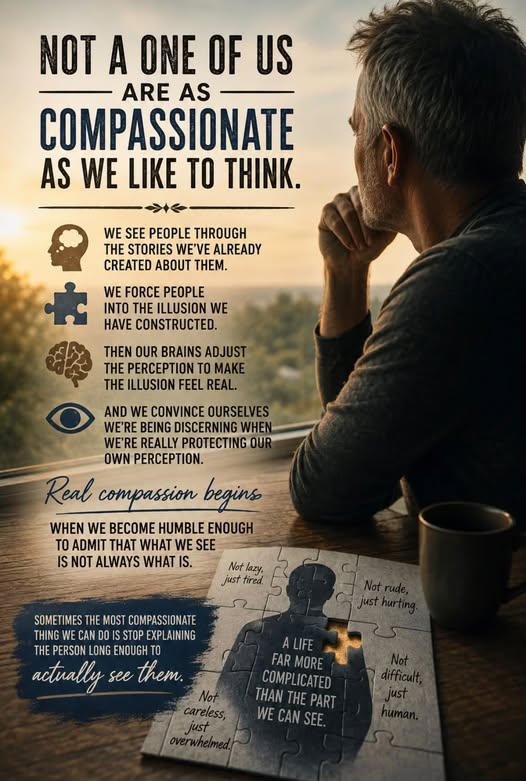
Not a one of us are as compassionate as we like to think we are.
We like to believe that if we could see someone’s pain clearly enough, we would naturally respond with compassion. But the truth is, we rarely see people exactly as they are. We see them through the stories we have already created about them.
We force people into the illusion we have constructed, and then our brains adjust the perception to make the illusion feel like reality. Their motives become what we assume they must be. Their failures become evidence of their character. Their struggles become consequences they must have brought upon themselves.
And somehow, we can convince ourselves that we are being discerning when what we are really doing is protecting our own perception.
The uncomfortable part is that this isn’t just something other people do.
I’m learning that, too.
And that’s saying something after six decades of life, a mountain of experiences, and more than enough wisdom to have accumulated along the way. You would think by now I would have this figured out.
But perhaps some lessons aren’t meant to be learned once and filed away. Perhaps they have to be learned again every time we encounter someone whose life doesn’t fit neatly into the explanation we’ve already given ourselves.
That’s why this isn’t an indictment of anyone—not even myself.
It’s an invitation to look a little closer.
Because there may be someone in your life right now whom you have already decided you understand.
You know why they act the way they do.
You know what their problem is.
You know what they should have done.
You know what they deserve.
And because you’ve built a convincing explanation, you may not even realize that you’ve stopped seeing the person and started seeing the explanation.
That’s where compassion gets lost.
Real compassion requires enough humility to say, “Maybe there is more here than I can see.”
It doesn’t mean excusing everything. It doesn’t mean abandoning discernment. It doesn’t mean pretending wrong is right.
It simply means leaving room for the possibility that our perception is incomplete.
Because every person we encounter is carrying a life far more complicated than the part we can see.
And maybe compassion begins there—not when we finally understand everyone, but when we become humble enough to realize that we don’t.
Sometimes the most compassionate thing we can do is stop explaining the person long enough to actually see them.
-Pastor Butch